
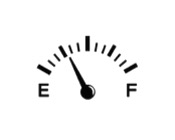
So it looks like the fuel is fast getting depleted and time is running out. No one likes to be in a vehicle with a hole in the fuel tank, with your aircraft out in sea….
Am I a Quitter?
There’s no harm in quitting. Quitting does not mean the end. It may just be the end of a chapter, and the beginning of a better one. The important thing is to know whether it is time to quit, when to quit and how to quit.
Kenny Rogers sings in the song ‘The Gambler’ ……… ‘Know when to throw them (the pack of cards), Know When to Fold Them, Know when to walk away, Know when to run…..’
‘Quitters’ usually are those whose performance has been falling consistently and is very low. Their potential over a period of time has dropped down significantly. Performance is clear – the results are poor but potential usually means their inability to the recover from own problems or inability to find solutions to their day to day issues. Their learnability may also be questionable. They are usually very low on confidence and may have suffered a series of failures. Quitters may fail because of their poor self management, declining people and business knowledge and ability to manage them
‘Quitters’ may have resigned to their fate or even have given up. They may also be unable perform their duties because of a medical problem or physical incapacity. The medical issue could also be mental / emotional. Stress, psychological disorders and such issues could also impact their performance
Sometimes, they may just be willing to slow down and get back another time and day – become useful in another Department or organization. So what can ‘Quitters’ do to get back if they are not really out and done?
Quitters can first and foremost put there everything to demonstrate an upward movement in results, even a small change can be a very positive development. They can request for additional time to be able to demonstrate significant Delta. To do this they have to focus / prioritise on highly probable result oriented prospects / tasks. They need to take the support available and see how more capable and qualified people complete such tasks. They can adopt a buddy system and learn from others.
The management and supervisor will not be willing to invest any more resources and may at best offer them a buddy. They can also see the inclination of the quitter through the buddy. As a last best effort, the quitter should do everything possible to impress upon the buddy the need for him to spend time. Such investment of time can be of immense value.
On the other hand if the quitter has been able to decipher for himself his in ability to complete the task, then he should rather move on instead of subjecting himself to the ignominy of repeated failure. This will holding him in good stead both with his ex employer as well as with his future employer. As Kenny Rogers sings, ‘You never count your money, When you sitting at the table, There will be time enough to count them, When the deal is done’
To Improve Performance – focus on easy to deliver and the area you are most knowledgeable and comfortable at.
To improve Potential – Learn new things, seek solutions and understand how to solve your (personal and professional) challenges. Seek another senior person’s advise. If you come through, your potential meter is back on the Full tank!